
Seven weeks ago, I stood in a room in New York with two hundred religious leaders, and I said something I have believed for a long time. The greatest threat to humanity is not nuclear weapons. It is humanity itself.
I did not say it to be clever. I said it because every danger we catalogue, from war to hatred to the quiet contempt that spreads through our screens, begins in the same place. It begins with the ordinary moment when one person looks at another and fails to see a person.
By the end of that morning, the leaders in the room had made five commitments to one another. We read them aloud as a Call to Action, and then we asked something harder of everyone who heard them. We asked each person to choose one concrete action, and to give it a place, a purpose, and a path forward.
A place, a purpose, and a path forward. I have been thinking about what that looks like for someone who was not in the room. The answer I keep coming back to is a table.
Why a table
A table is a place. You invite people to it for a reason. And if it goes well, you set it again.
When we gathered the written commitments of fifty-five leaders for the summit report, from a dozen traditions and five continents, I noticed something nobody had planned. Writing separately, many of them arrived at the same unglamorous answer. The way forward involves tables, food, listening, and time.
So between now and Thanksgiving, the World Council of Religious Leaders is inviting you to set one table each week. Each will be a little wider than the last. We will begin at home, then move to the street, then reach across difference, then into service, and finally into the life of your town. On the week of Thanksgiving, when nearly every household in this country sets a table anyway, we will bring all five together.
The first table is your own
The first commitment we made in New York reads: We will begin with ourselves.
It is the least comfortable of the five, and that is why it comes first. It asks us to examine the words, teachings and habits of our own communities before we point at anyone else’s.
I watched leaders do this in public that morning. They stood in front of their peers and questioned their own communities’ histories, and they did not soften what they found. One after another said the same thing: we must name the failings in our own house before we have any credibility naming anyone else’s. Nobody was performing. They were showing us where the work starts.
For most of us, the house in question is not a house of worship or a council chamber. It is a kitchen. Most of what we learn about other people, we learn at a kitchen table. We learn which jokes get a laugh, which names get used for which neighbors, and which communities never come up at all. Children are listening at that table long before they hear us from any podium.
What we are asking you to do
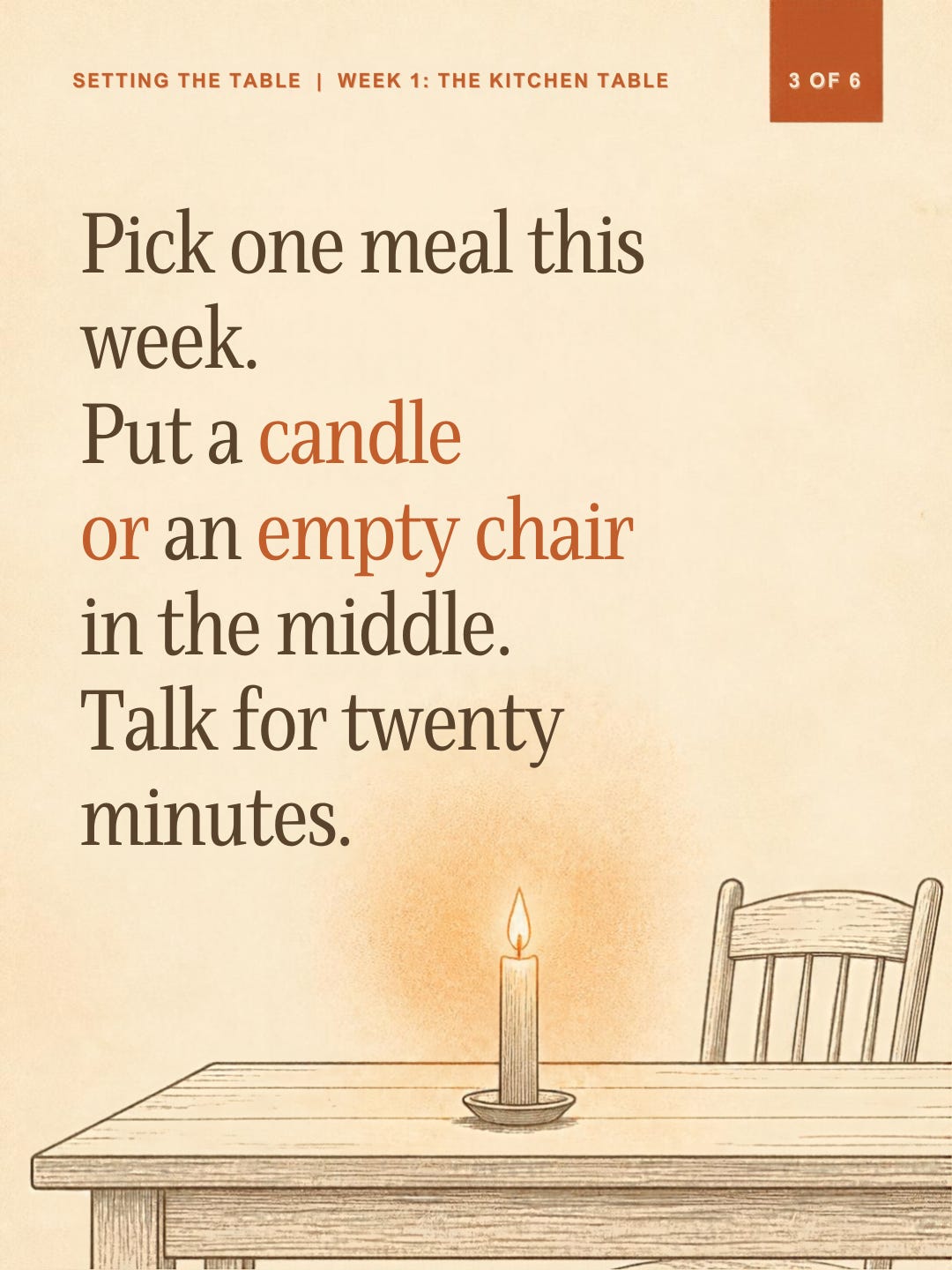
This week, pick one meal. It can be an ordinary dinner. Tell the people you live with that you would like to spend twenty minutes talking about how your household speaks about people who are different. Put something in the middle of the table, perhaps a candle or an empty chair, as a reminder that the meal has a purpose.
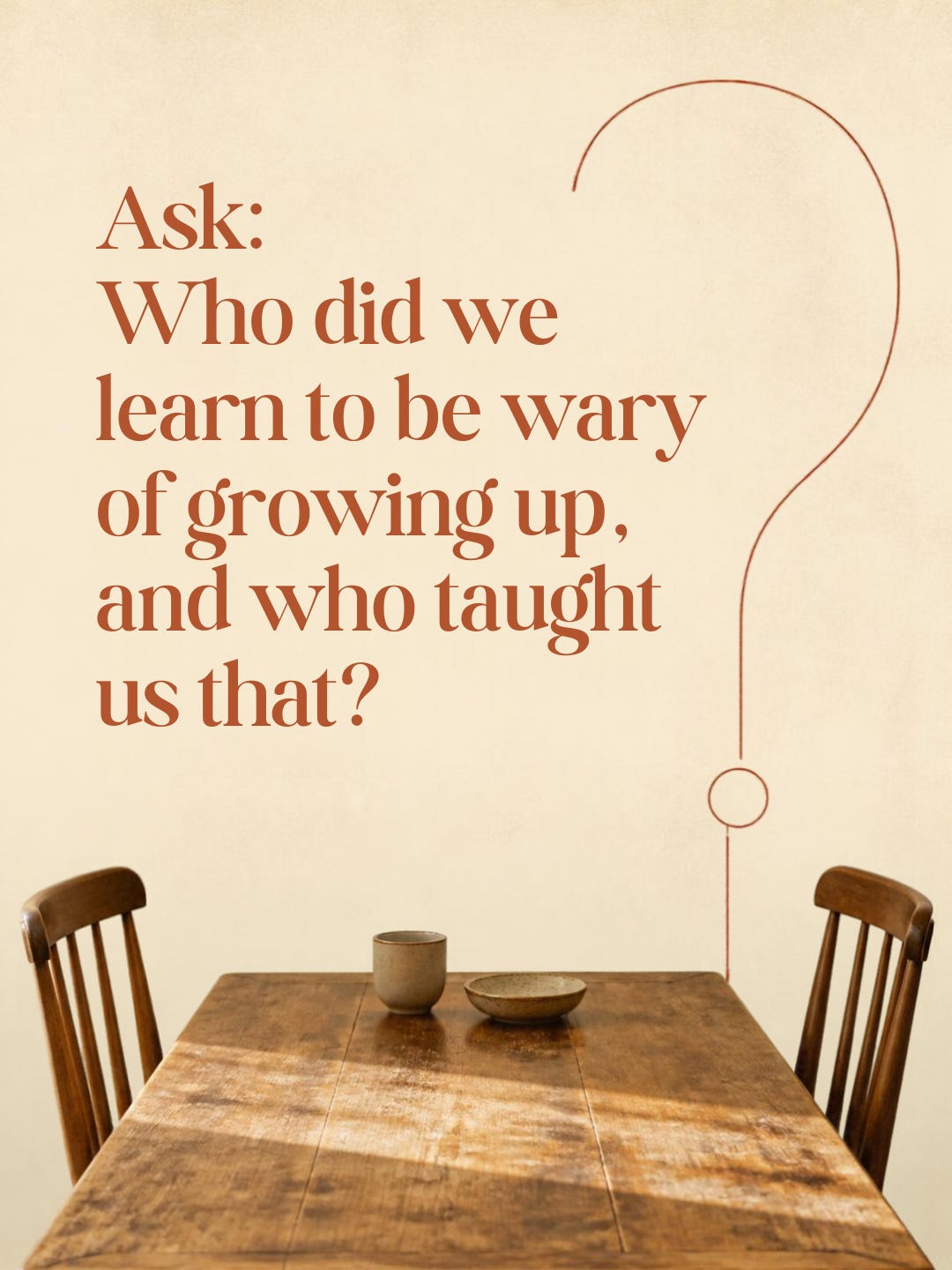
Then ask one honest question. Who did we learn to be wary of growing up, and who taught us that?
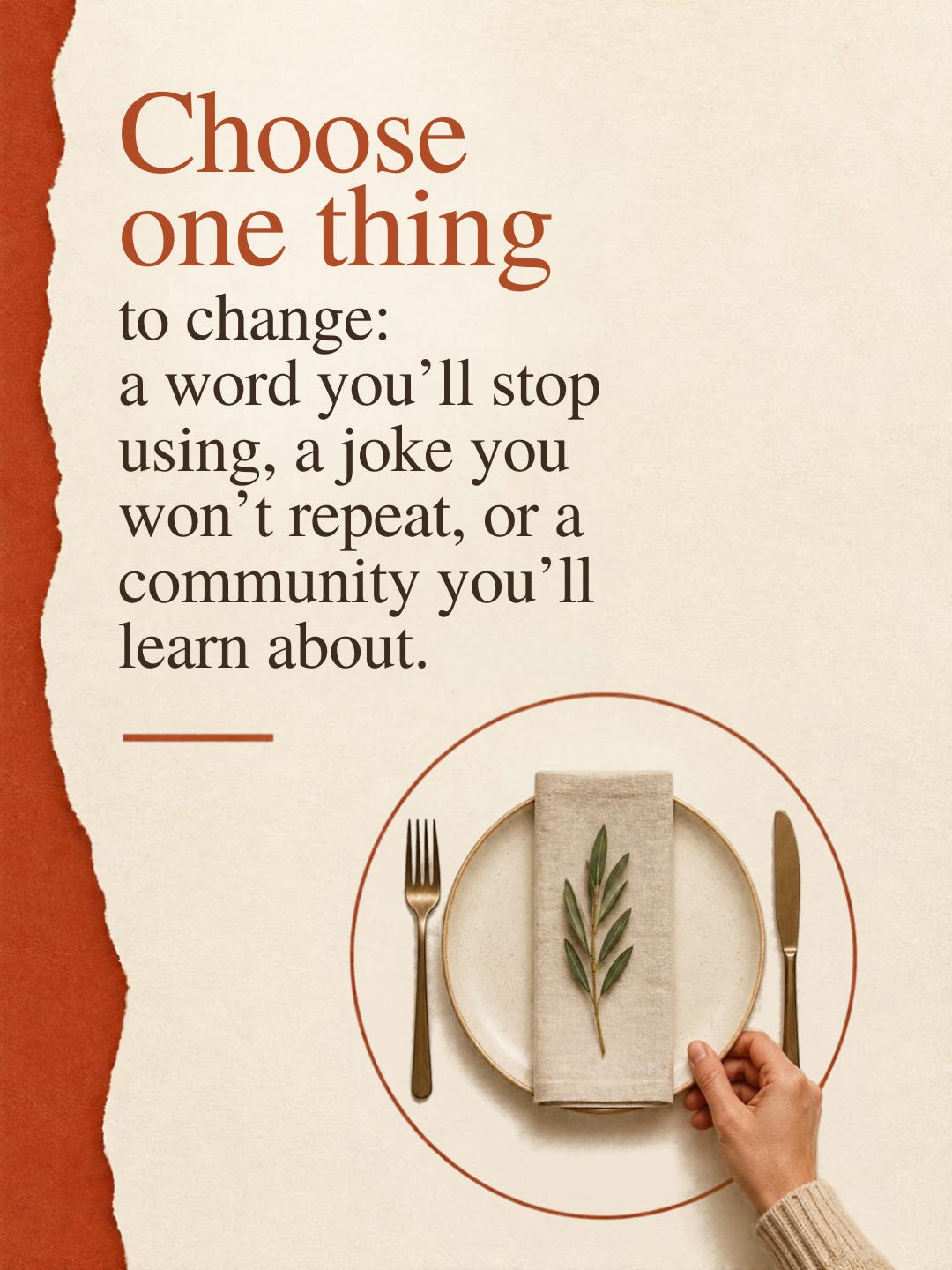
Listen more than you speak. No one has to confess anything. Before you leave the table, let each person choose one thing to change. It might be a word they will stop using, a joke they will not repeat, or a community they will take the trouble to learn about. Write it down and put it on the refrigerator.
That is all. It is a small thing. But I have spent my life in rooms where religion is discussed, and I know the difference between a hope and a plan. A hope is something you say at a podium. A plan is something you do at your own table on a Tuesday night.
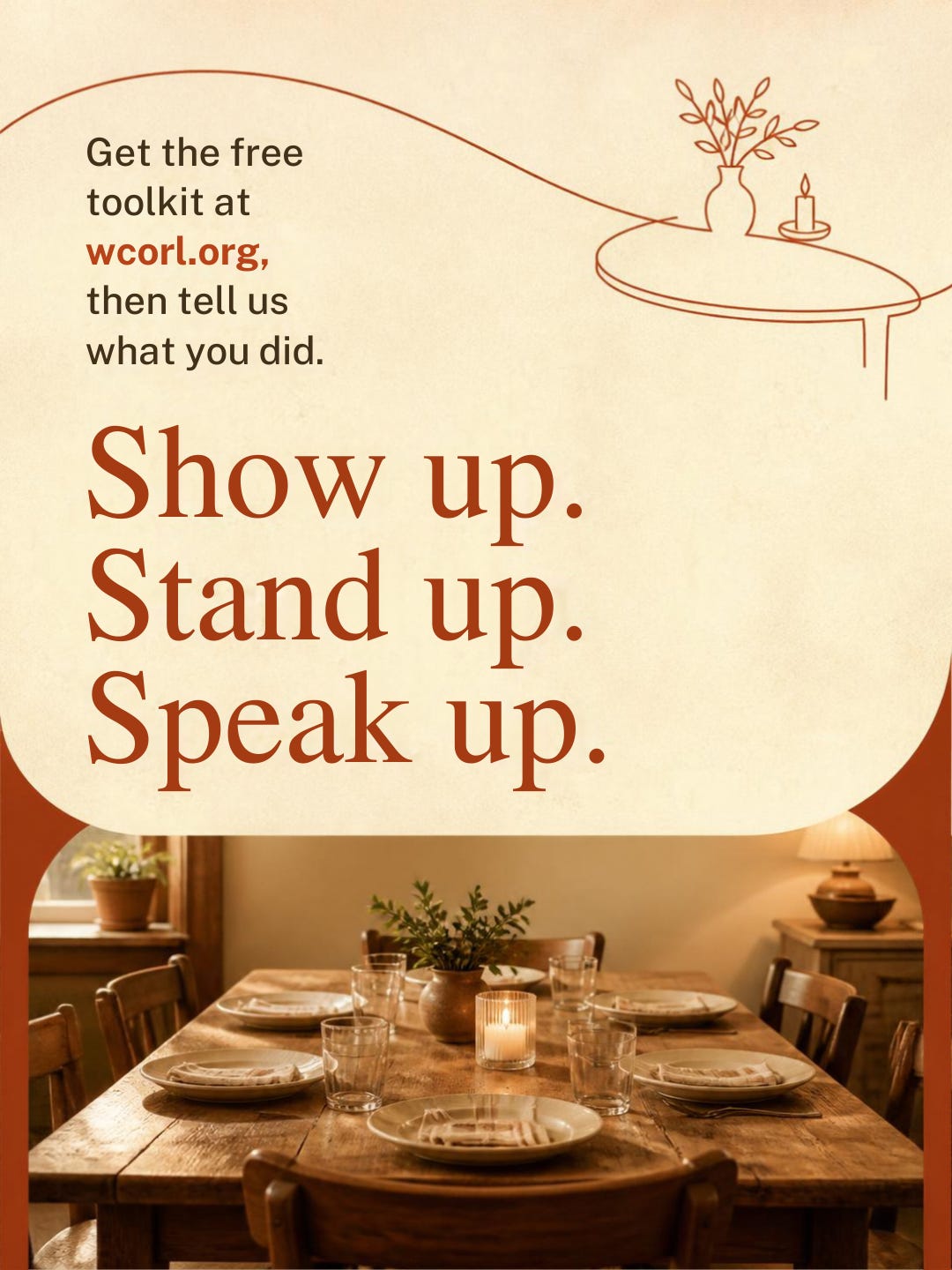
We have prepared a toolkit for this week with conversation prompts, an invitation you can send, and a short reading from the Call to Action to open the meal. You can print it, edit it, or design your own version. You will find it at wcorl.org.
Tell us what you did
The Call to Action ends with two requests, and I will repeat them here. Tell us what you intend to do. Then tell us what you did.
When you have set your table, tell us where you sat, who came, and what you chose. We are gathering every story. Next week, we will widen the table and invite someone we have never really talked to.
Peace does not begin in New York or Geneva. It begins much closer to home than that.
Show up. Stand up. Speak up.
H.E. Bawa Jain is Secretary General of the World Council of Religious Leaders.